

Colorado Cleaning Laws & Janitorial Cleaning Standards: What Businesses and Property Owners Should Know

Keeping a Colorado workplace clean may seem straightforward, but professional cleaning involves more than vacuuming floors, emptying trash cans, and wiping down surfaces. Businesses, property managers, and cleaning companies may also need to consider workplace safety rules, chemical handling requirements, disinfectant instructions, environmental regulations, and industry-specific cleaning standards.
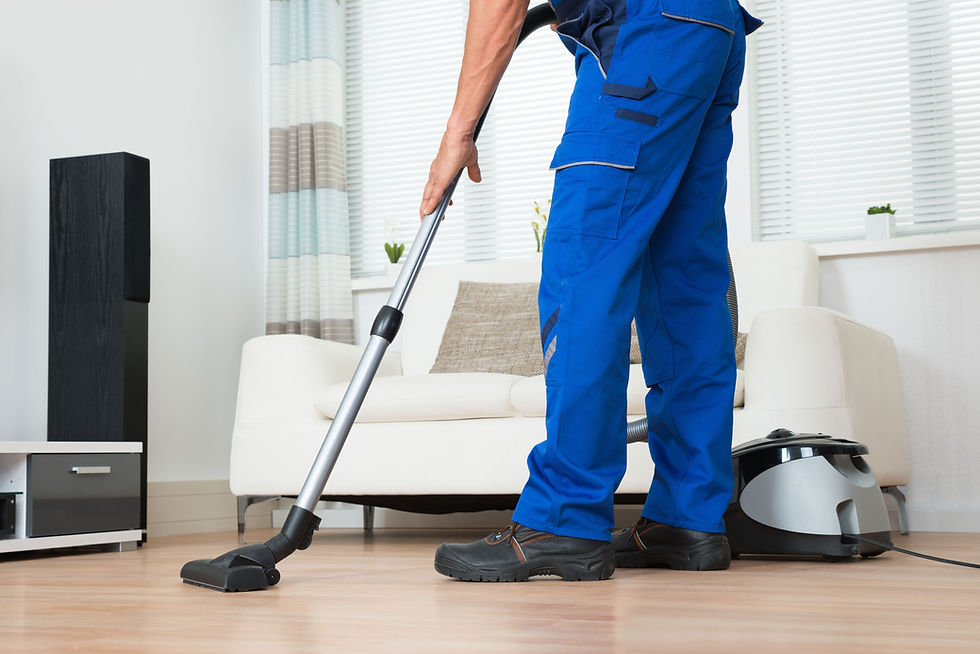
Is there a Colorado law establishing exactly how an office must be cleaned? Does OSHA certify cleaning companies? Are ISSA cleaning standards legally required? What should be included in a standard office cleaning program?
The answer depends on the facility and the work being performed.
Colorado businesses generally do not operate under one universal "commercial cleaning code." Instead, cleaning practices can be affected by several layers of requirements, including federal workplace safety regulations, Colorado environmental regulations, product-label requirements, facility-specific rules, and voluntary professional standards.
Understanding the difference between a legal requirement and an industry best practice can help Colorado businesses make better decisions about how their facilities are maintained.
Are There Specific Cleaning Laws in Colorado?
There is no single Colorado law that establishes a universal standard cleaning list for every office, commercial property, or residence.
Instead, the requirements that apply can depend on factors such as:
The type of facility
The chemicals being used
Whether employees may encounter hazardous materials
The type of cleaning or restoration work being performed
Whether disinfectants are being used
Environmental and waste considerations
Industry-specific regulations
A normal professional office, for example, has very different cleaning considerations from a healthcare facility, food operation, industrial facility, school, or property undergoing mold or water-damage restoration.
Colorado businesses should therefore think about cleaning standards in two categories: regulatory requirements that may be legally enforceable and voluntary industry standards designed to improve quality and consistency.
For businesses looking for routine professional maintenance, Elevate Janitorial Solutions provides commercial cleaning and janitorial services throughout Colorado, including office and workspace cleaning, high-traffic facility cleaning, and floor care.
OSHA Requirements and Colorado Janitorial Companies
One of the most important regulatory considerations for professional cleaning companies is workplace safety.
Colorado does not operate an OSHA-approved State Plan for private-sector workplaces. As a result, most private-sector employers and workers in Colorado fall under federal Occupational Safety and Health Administration requirements.
The Occupational Safety and Health Administration's Colorado information identifies federal OSHA offices serving Colorado and confirms that they cover private-sector employers and workers in the state.
For cleaning operations, OSHA identifies numerous potential workplace hazards, including chemical exposure, falls, electrical hazards, ergonomics, bloodborne pathogens, personal protective equipment, and other risks.
This does not mean that OSHA provides a general "OSHA cleaning certification" that every janitorial company must obtain.
Instead, employers are responsible for complying with OSHA standards that apply to the hazards their workers actually encounter.
That distinction is important when searching for terms such as OSHA cleaning certification, OSHA certification for cleaning business, or OSHA cleaning certification online. Training programs may help businesses understand OSHA requirements, but there is not one universal OSHA certificate that automatically makes a cleaning company compliant.
Cleaning Chemicals, Safety Data Sheets, and OSHA Hazard Communication
Cleaning professionals routinely work with detergents, disinfectants, degreasers, floor-care products, and other chemicals.
When hazardous chemicals are present in a workplace, OSHA's Hazard Communication Standard can become particularly important.
Under OSHA's Hazard Communication Standard, 29 CFR 1910.1200, employers covered by the standard must provide employees with information about hazardous chemicals to which they are exposed.
Depending on the workplace and chemicals involved, this can include:
A written hazard communication program
Proper chemical labeling
Safety Data Sheets (SDS)
Employee information and training
Information about appropriate protective measures
Safety Data Sheets are especially important because they provide information concerning hazards, safe handling, storage, exposure controls, first aid, and other safety considerations associated with a product.
Professional cleaning is therefore not simply about selecting a product that works. Cleaning personnel need to understand how applicable products should be handled and what precautions are necessary.
Personal Protective Equipment and Workplace Safety
Certain cleaning activities may also require personal protective equipment.
OSHA's general PPE requirements require covered employers to evaluate workplaces for hazards that are present or likely to be present and that may require protective equipment.
Depending on the job, appropriate PPE could potentially include gloves, eye protection, protective clothing, or other equipment.
The appropriate protection depends on the hazard.
Cleaning a typical office desk is obviously different from working with a concentrated chemical, handling contaminated material, performing certain restoration work, or entering an environment with specialized hazards.
For property owners and facility managers, this is one reason professional janitorial services should be evaluated on more than whether a crew can make a building look clean. Proper procedures, employee training, chemical handling, and workplace safety practices are also important components of a professional cleaning operation.
Cleaning vs. Sanitizing vs. Disinfecting
The terms cleaning, sanitizing, and disinfecting are sometimes used interchangeably, but they do not mean exactly the same thing.
According to the U.S. Environmental Protection Agency, cleaning primarily removes dirt and organic material from surfaces. Sanitizers and disinfectants, on the other hand, are antimicrobial products intended to kill certain microorganisms.
This distinction matters because disinfectants are regulated by the EPA as antimicrobial pesticides.
When an EPA-registered disinfectant is used, the product's label directions matter. Instructions can specify where the product may be used, how it should be applied or diluted, and how long a surface must remain wet for the product to work as intended.
Simply spraying disinfectant and immediately wiping it away may not produce the result the user expects if the product requires a longer contact time.
For Colorado businesses, effective facility maintenance therefore involves understanding when routine cleaning is appropriate and when sanitization or disinfection is actually necessary.
What Does Standard Office Cleaning Include?
There is no single federally mandated standard office cleaning checklist that applies to every Colorado business.
A professional cleaning plan should instead reflect the building's layout, occupancy, traffic patterns, surfaces, business hours, and specific facility requirements.
A typical standard cleaning service for an office may include:
Removing trash and replacing liners
Dusting accessible surfaces
Vacuuming carpets
Mopping hard-surface flooring
Cleaning and maintaining restrooms
Cleaning sinks, counters, and fixtures
Cleaning breakrooms and common areas
Wiping appropriate high-touch surfaces
Cleaning entryways
Spot cleaning glass and other surfaces
Restocking designated restroom supplies
Periodic deeper floor care
Higher-traffic environments may require additional attention or a different cleaning frequency.
For example, a busy lobby, restroom, shared workspace, or public-facing facility may require more frequent service than a small private office.
Elevate's professional cleaning services for Colorado homes and businesses are designed around the property's schedule, traffic, layout, and operational needs rather than relying on a one-size-fits-all checklist.
What About Standard House Cleaning?
The same principle applies to standard house cleaning.
There is not a statewide Colorado checklist dictating exactly what every residential cleaning appointment must include.
A standard house cleaning commonly focuses on routine maintenance, such as dusting, vacuuming, mopping, kitchen surfaces, bathrooms, fixtures, and general living areas.
Deep cleaning may address areas that are not normally part of recurring maintenance.
Move-in and move-out cleaning can involve another scope entirely.
Homeowners should therefore clarify what a cleaning provider considers "standard" before comparing services or standard cleaning prices.
Elevate's residential cleaning services include routine home and living-space cleaning as well as attention to kitchens, bathrooms, high-use areas, floors, and deeper cleaning needs.
Colorado Environmental Requirements and Cleaning Operations
Colorado environmental regulations can also intersect with cleaning operations.
Interestingly, the Colorado Department of Public Health and Environment identifies many ordinary janitorial activities as exempt from certain state air permitting and Air Pollutant Emission Notice requirements.
CDPHE's Air Pollution Control Division guidance lists examples including janitorial activities and products, aerosol-can usage, housekeeping vacuum systems, portable steam-cleaning equipment, and certain office cleaning emissions.
An exemption from a particular air-permitting requirement does not, however, mean that every possible chemical, waste stream, or cleaning operation is unregulated.
Businesses may encounter additional requirements depending on the substances involved, the quantity generated, how waste is handled, and the facility itself.
This becomes especially important when cleaning moves beyond routine janitorial work into industrial cleaning, hazardous materials, remediation, healthcare, or other specialized environments.
Are ISSA Cleaning Standards Required by Law?
Another common source of confusion involves professional certifications and standards.
ISSA's Cleaning Industry Management Standard (CIMS) is a respected framework for cleaning organizations, but it should not be confused with a Colorado law.
According to the International Sanitary Supply Association's CIMS program, CIMS is designed to help cleaning organizations establish management systems focused on quality, efficiency, service delivery, safety, and customer needs.
Organizations seeking CIMS certification undergo an assessment process demonstrating conformity with the standard.
CIMS therefore provides a framework for professional cleaning operations, but it does not replace OSHA requirements, EPA regulations, Colorado regulations, or facility-specific legal obligations.
In simple terms:
OSHA/EPA/Colorado requirements may establish legal responsibilities. CIMS establishes a voluntary professional management standard.
Both can influence how a professional cleaning operation is run, but they serve different purposes.
Where Does IICRC Certification Fit?
The Institute of Inspection, Cleaning and Restoration Certification (IICRC) is another organization frequently encountered when researching professional cleaning standards.
IICRC develops consensus-based standards and professional certifications covering areas such as inspection, cleaning, and restoration.
These standards become particularly relevant when work moves beyond ordinary janitorial cleaning into specialized services such as water damage restoration, mold remediation, carpet cleaning, or fire and smoke restoration.
An IICRC certification online search, for example, may lead to professional training and certification opportunities for technicians.
However, like CIMS, an IICRC credential should not automatically be interpreted as a Colorado government license or a universal legal requirement for ordinary office cleaning.
The correct credential depends heavily on the type of work being performed.
Different Facilities Require Different Cleaning Standards
Perhaps the most important takeaway for Colorado property owners is that there is no universal cleaning standard appropriate for every building.
A standard office cleaning program may be sufficient for a professional office but inappropriate for a medical environment.
Similarly, data center cleaning standards may involve concerns about sensitive equipment and contamination that do not exist in an ordinary office.
Other environments can have their own requirements or industry practices, including:
Healthcare facilities
Schools and childcare environments
Food-service facilities
Industrial properties
Data centers
Construction sites
Restoration projects
High-traffic public buildings
Facility managers should therefore determine what regulations and standards apply specifically to their property rather than assuming a generic cleaning checklist will cover every requirement.
What Should Colorado Businesses Look for in a Cleaning Company?
For most businesses, choosing a janitorial provider comes down to much more than finding the lowest price.
Look for a provider that can clearly explain its cleaning processes, service frequency, quality-control approach, chemical practices, and how the cleaning plan will be customized to your facility.
Consistency matters.
A well-designed cleaning program should establish what needs to be cleaned, how frequently it needs attention, what products and equipment are appropriate, and how quality will be maintained over time.
If you're evaluating providers, our guide on commercial janitorial services in Colorado provides more information about office cleaning, high-traffic facilities, and professional floor care.
Creating a Higher Standard for Colorado Facilities
Colorado cleaning laws and professional janitorial standards are best understood as a combination of different requirements rather than one universal rulebook.
Federal OSHA standards can govern employee safety and hazardous chemical communication. EPA requirements affect disinfectant products and their proper use. Colorado environmental regulations may apply to certain activities and waste streams. Facility-specific rules can create additional obligations.
Meanwhile, voluntary programs such as ISSA cleaning standards, CIMS, and IICRC standards provide professional frameworks that can help organizations establish consistent processes and technical best practices.
For property owners and businesses, the goal should not simply be to meet a generic standard cleaning list. It should be to develop a cleaning program appropriate for the people, activities, surfaces, traffic, and risks within the facility.
That's where a customized approach can make a significant difference.
Elevate Janitorial Solutions provides commercial and residential cleaning services in Colorado, with cleaning plans designed around the individual needs of each property.
This article is intended for general informational purposes and should not be considered legal, regulatory, or workplace-safety advice. Requirements can vary based on the facility, employer, work performed, chemicals used, and applicable local, state, and federal regulations.
Comments