

How Often Should an Office Be Professionally Cleaned? A Practical Guide for Businesses


How often should an office be cleaned?
It sounds like a simple question, but there isn't a single cleaning schedule that works for every workplace. A small professional office with ten employees may have completely different cleaning needs than a busy medical office, call center, dealership, school, or multi-tenant commercial building.
For most businesses, determining the right commercial cleaning frequency comes down to several factors: the number of people using the building, foot traffic, restrooms, flooring, food areas, operating hours, season, and the type of work performed inside the facility.
Instead of asking whether an office should be cleaned once, three times, or five times per week, facility managers should first consider which areas need cleaning and how frequently each area is actually used.
Here's how to build a more effective office cleaning schedule.
There Is No Universal Office Cleaning Schedule
One of the biggest misconceptions about commercial cleaning is that the size of a building determines how frequently it should be cleaned.
Square footage certainly matters when estimating the amount of work involved, but occupancy and usage can be even more important.
Imagine two 5,000-square-foot offices.
The first has 12 employees, very few visitors, one breakroom, and two small restrooms.
The second has 60 employees, customers entering throughout the day, multiple restrooms, a large breakroom, and a busy reception area.
Even though the buildings have identical square footage, cleaning them on the same schedule probably wouldn't make sense.
A better commercial cleaning plan considers both building size and building activity.
What Factors Determine How Often an Office Should Be Cleaned?
Before establishing a commercial cleaning schedule, consider the following:
Number of employees
Number of daily visitors
Hours of operation
Number and size of restrooms
Amount of carpet versus hard flooring
Breakrooms or kitchens
Public-facing spaces
Children or high-risk populations using the facility
Pets or animals in the building
Seasonal weather
Type of business
Building age and condition
These factors can dramatically change cleaning requirements.
For example, a busy customer-facing office may require daily entrance and restroom cleaning even when private offices only require detailed cleaning a few times per week.
That is why commercial cleaning schedules should be based on individual areas rather than treating the entire building exactly the same.
Should an Office Be Cleaned Every Day?
Not necessarily.
Many offices don't require complete cleaning every day. However, high-traffic commercial facilities may benefit from daily janitorial service, especially when they have heavily used restrooms, breakrooms, entrances, or public spaces.
Daily commercial cleaning might include:
Emptying trash
Cleaning restrooms
Restocking restroom supplies
Cleaning breakroom surfaces
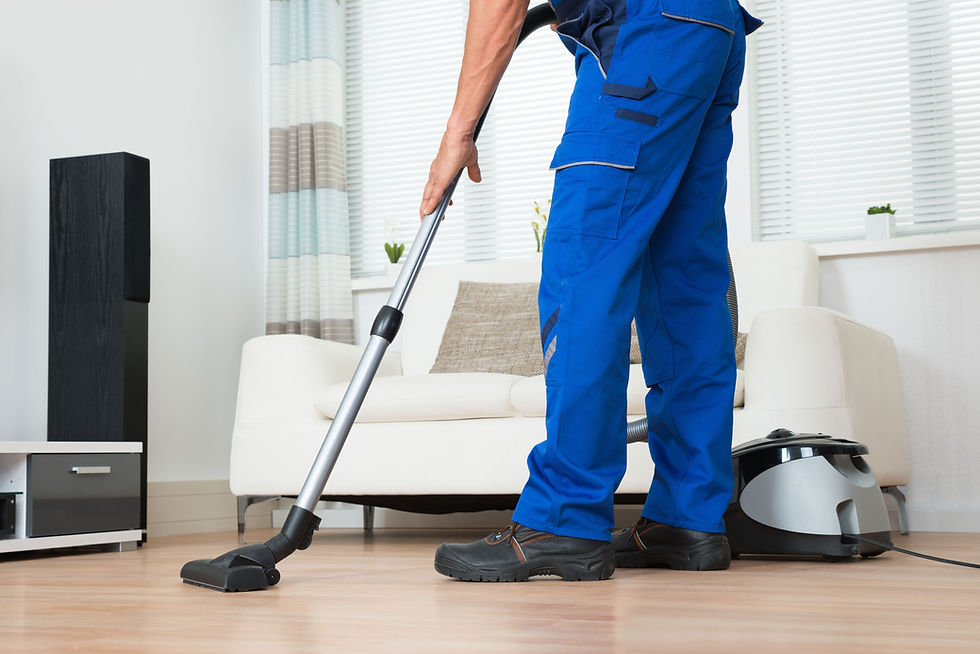
Vacuuming high-traffic carpet
Cleaning entrance flooring
Mopping high-traffic hard floors
Addressing visible spills and debris
Cleaning frequently touched surfaces
Lower-use spaces may not require the same frequency.
Private offices, conference rooms, storage areas, and rarely used spaces might be cleaned on a rotating schedule depending on their actual use.
The goal is not necessarily to clean everything every day. It is to prevent frequently used areas from becoming noticeably dirty between scheduled services.
Restrooms Often Determine Cleaning Frequency
When evaluating how often a commercial building should be cleaned, start with the restrooms.
Restrooms can quickly reveal whether a cleaning schedule is adequate.
Consider the number of employees and visitors sharing each restroom. A restroom used by eight office employees has very different requirements from one serving hundreds of people.
Commercial restroom cleaning typically includes:
Toilets and urinals
Sinks and faucets
Counters
Mirrors
Dispensers
Partitions
Floors
Trash removal
Restocking paper products and soap when applicable
Facility managers should also watch for recurring odors, overflowing trash, empty dispensers, visible buildup, or consistently dirty floors.
If these problems develop well before the next scheduled cleaning, the restroom may need more frequent service.
High-Touch Surfaces May Need More Frequent Cleaning
Not every part of an office receives equal contact.
Door handles, elevator buttons, shared appliances, light switches, faucets, railings, and other frequently touched surfaces can receive significant use throughout the workday.
The Centers for Disease Control and Prevention explains the important distinction between cleaning and disinfecting: cleaning removes dirt and many germs from surfaces, while disinfecting uses chemicals to kill remaining germs.
Although that particular CDC guidance is written for household environments, the basic distinction is useful when developing workplace procedures: routine cleaning and disinfection are not the same task.
Businesses should also follow any industry-specific requirements that apply to their facilities.
Floors Should Be Cleaned According to Traffic
Flooring is another major factor when determining commercial cleaning frequency.
Entrance flooring may need attention every service, while a low-traffic conference room may not.
Think of commercial floors in three categories:
High traffic: entrances, reception areas, main hallways, breakrooms, restrooms, elevators, and heavily used work areas.
Medium traffic: general offices, secondary hallways, conference rooms, and shared workspaces.
Low traffic: storage areas, rarely used rooms, and limited-access spaces.
Vacuuming, sweeping, dust mopping, and damp mopping can then be scheduled based on actual traffic.
Periodic floor maintenance should be considered separately from routine cleaning.
Carpet Needs Both Routine and Periodic Cleaning
Commercial carpet should not be ignored until it visibly looks dirty.
Soil commonly accumulates around entrances, under desks, along main walking paths, near transitions between flooring types, and in heavily used common areas.
Routine vacuuming removes loose debris before it becomes more deeply embedded.
Spots should also be addressed relatively quickly. Allowing spills and stains to remain for extended periods can make them more difficult to remove later.
Depending on traffic and the carpet manufacturer's recommendations, periodic deeper carpet cleaning may also be necessary.
Commercial carpet maintenance is usually most effective when it combines frequent vacuuming, prompt spot treatment, and scheduled restorative cleaning rather than relying on one method alone.
Breakrooms May Need More Attention Than Private Offices
Commercial breakrooms combine food, beverages, trash, moisture, shared appliances, and frequent employee use.
Even in a relatively small office, a heavily used breakroom may need cleaning every service.
Areas to consider include:
Countertops
Tables
Sinks and faucets
Appliance exteriors
Microwave interiors
Cabinet fronts
Floors
Trash and recycling containers
Frequently touched handles
Businesses should also clearly establish who is responsible for employee dishes, refrigerator contents, coffee machines, and personal food.
Those tasks shouldn't be assumed to be part of routine commercial cleaning unless they have been specifically assigned.
Seasonal Conditions Can Change Your Cleaning Schedule
A cleaning schedule that works perfectly in July may not work in January.
Rain, snow, mud, leaves, pollen, and deicing materials can dramatically increase the amount of debris entering a commercial building.
Entrance mats can help capture some contaminants before they spread throughout the facility.
The U.S. Environmental Protection Agency also provides extensive information about indoor air quality, pollutants, moisture, ventilation, and other factors that can influence indoor environments.
Businesses in climates with changing seasons should expect their cleaning needs to fluctuate throughout the year.
Instead of maintaining exactly the same schedule year-round, facility managers may need to increase attention to entrances and flooring during periods of snow, rain, or heavy outdoor debris.
What About Dusting?
Visible desk surfaces may receive routine attention, but other areas can be placed on rotating schedules.
These might include:
Window sills
Baseboards
Door frames
Blinds
High shelves
Partition tops
Vents
Light fixtures
Ceiling fans
Tops of cabinets
High dusting generally doesn't need to occur every night in a typical office.
Instead, these tasks can be incorporated into weekly, monthly, or quarterly cleaning rotations based on how quickly dust accumulates.
This is one reason a commercial cleaning checklist should contain more than a list of tasks—it should also identify frequency.
How Frequently Should Common Office Cleaning Tasks Be Completed?
While every building is different, a practical office cleaning program might organize work into several categories.
Every Cleaning Visit
Depending on the facility, this can include trash removal, restroom cleaning, high-traffic floor care, breakroom cleaning, visible debris removal, and frequently touched surfaces.
Weekly
Detailed dusting, lower-traffic floors, doors, office furniture, conference rooms, and other rotating tasks may fit into a weekly schedule.
Monthly
Baseboards, blinds, vents, high surfaces, detailed edges and corners, and other areas that accumulate dust gradually may be addressed monthly or placed into a monthly rotation.
Quarterly or Periodically
Carpet extraction, detailed floor maintenance, high dusting, window cleaning, upholstery cleaning, and other restorative tasks can be scheduled according to building conditions and manufacturer recommendations.
These are examples rather than universal rules. A facility's actual usage should determine its schedule.
Cleaning Products Matter Too
Cleaning frequency isn't the only consideration. Products need to be appropriate for the surfaces and environments where they're used.
The U.S. Environmental Protection Agency's Safer Choice program evaluates qualifying products against established human-health and environmental criteria.
When disinfectants are necessary, businesses can also consult the EPA's Selected EPA-Registered Disinfectants resources.
Products should always be used according to their labels, including dilution instructions, required protective equipment, surface compatibility, and contact time when applicable.
More chemical is not automatically more effective.
Don't Forget About Worker Safety
Commercial cleaning employees can encounter chemical exposure, wet floors, repetitive motion, lifting, electrical equipment, ladders, and other workplace hazards.
The Occupational Safety and Health Administration's guidance for protecting workers who use cleaning chemicals discusses chemical labels, Safety Data Sheets, worker training, ventilation, personal protective equipment, and safe handling practices.
A good commercial cleaning program should therefore consider both the cleanliness of the facility and the safety of the people performing the work.
Signs Your Office Isn't Being Cleaned Often Enough
Sometimes the building itself provides the best answer.
Watch for recurring problems such as:
Trash overflowing before the next service
Restroom odors
Empty soap or paper dispensers
Visible debris in entrances
Carpet spots remaining untreated
Dust collecting on commonly visible surfaces
Breakroom floors becoming sticky
Heavy buildup around restroom fixtures
Dirt collecting along floor edges
Frequent employee complaints about cleanliness
If the same problems repeatedly appear between cleaning visits, increasing frequency or adjusting the scope may be more effective than simply asking cleaners to "clean better."
The problem may be that the existing schedule doesn't match the building's actual usage.
Finding the Right Commercial Cleaning Frequency
So, how often should an office be professionally cleaned?
For some businesses, once or twice per week may adequately maintain the facility. Others may need cleaning three to five times per week, while busy commercial buildings may require daily service or attention to certain areas multiple times per day.
The better question is:
How frequently does each area need attention to remain consistently maintained between services?
Evaluate restrooms, entrances, flooring, breakrooms, employee count, visitor traffic, operating hours, and seasonal conditions separately.
Then build a cleaning schedule around those needs.
Commercial cleaning works best when it is proactive rather than reactive. A well-designed schedule addresses heavily used areas frequently while rotating less urgent tasks throughout the month, quarter, and year.
The result is a cleaning program based on how the building actually operates—not simply how many square feet it contains.


Comments